Is there more than one way to price a product?
Hello everyone; and welcome back once again to my blog! It is has been a little while since my last post. I have been very busy with all of my classes here at Saint Micheal's College; it is almost the end of the semester; also known as crunch time! But without further ado it is now time to talk about pricing in terms of marketing!
I am going to give you some background information about pricing and then i am going to inform you about all of the different kinds of pricing approaches that are used in the world of marketing!

When you think of the word price what comes to mind?
There can be many answers to this question depending on how you think of the word; to me i think of paying money to obtain a product. But there are many ways that the world price can be thought of...You pay TUITION for attending college
You pay RENT for your apartment
You pay DUES to an organization
You pay INTEREST on your bank loan
You pay a FEE when traveling on an airplane
You obtain a SALARY as a business person
You obtain a WAGE as an employee
You receive a SALES COMMISSION as a sales person

All of these listed above are great examples of price; price plays a unique role in the marketing world. It is a good meeting place for all business decisions; because the price has to be "right" where the customer is willing to pay that amount; no matter if it is a tuition price, or a fee. The price still has to be attractive to the customer.
what is a price?
Price plays a large part in our day to day lives; when looking at price through the marketing lens price is the money or other considerations that are exchanged for the ownership or use of a product or service.
You may be wondering what the way that one can obtain a product without exchanging money. well that other way is known as BARTER; the practice of exchanging products and services for different products and services rather than money. Examples of this could be gold, silver, coins and much more. Most of the time money is how consumers obtain their products and services; but barter does still take place;
a side note from marketing for a second about barter in the Caribbean!

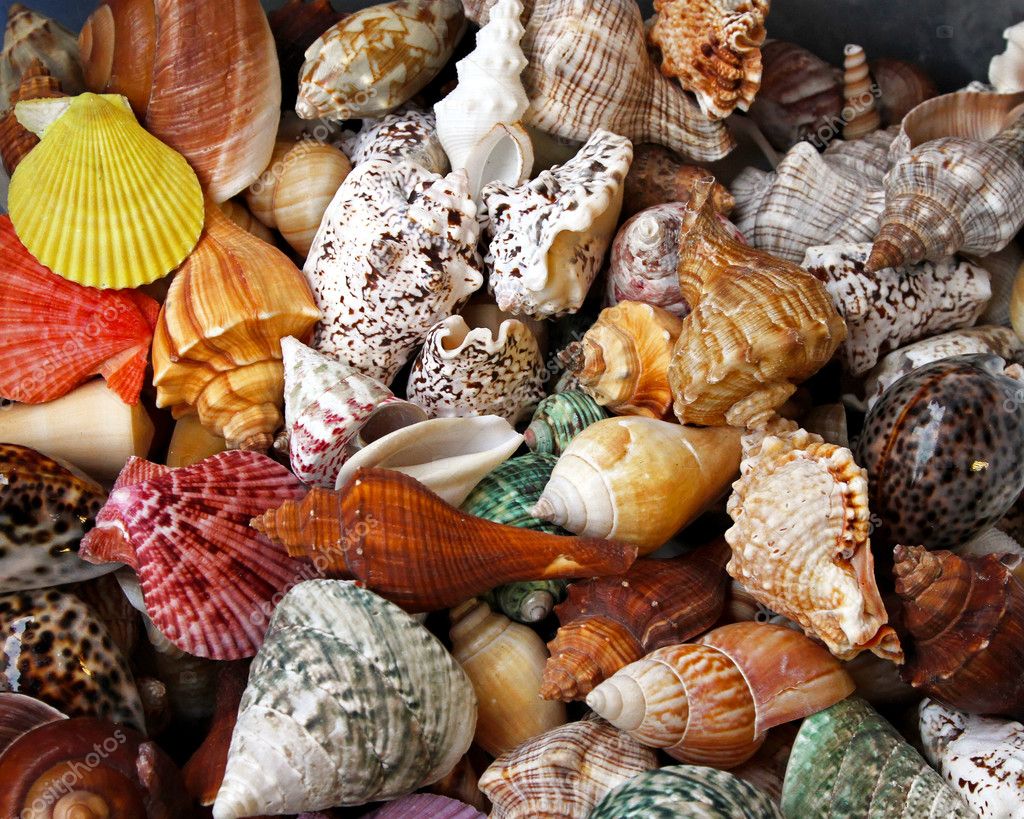
Last Christmas when I was in the Caribbean I actually got to barter with a vendor on the Island. We were walking back to the cruise ship after a long day at the beach in St. Thomas. During my time at the beach I had gathered many large sea shells.(keep this in mind) When admiring his product I saw a beautiful blue necklace that I wanted. I was prepared to get out my cash and pay the price for the necklace. Turns out that the vendor asked me if I would like to exchange two of my sea shells for the necklace. Seeming that I had gathered almost 60 shells I said of course! He picked out the two shells he wanted and I took my necklace and I was on my way! This is a great example of barter; it does not involve the exchanging of cash.

Now back to talking about pricing: we know that a price is the money that is exchanged for the ownership of use of a product or service. Now that we have some background and we know what barter is we are able to learn about the different strategies when it comes to pricing.
One more side note before we get to the different kinds of pricing: lets examine the....
price equation
PRICE= LIST PRICE- INCENTIVES AND ALLOWANCES + EXTRA FEES
This is a very important equation to know when you want to find the price of how much something cost. Lets take college for example...
Tuition= 40,000
Incentives( scholarships) 3300
Extra fees ( lab fees, activity fees) 2500
to get to our final price we take the 40,000 tuition less the incentives of 3300 and then add on the extra fees of 2500; making the price of college $39,200.
DIFFERENT PRICING APPROACHES
Alright; I promise no more asides; we are now going to go over some different types of pricing! There are many more types of pricing strategies that exist but i am going to inform you of five of the main types of pricing strategies.
Skimming pricing: Setting a high initial price that customers really wanting the product are willing to pay.

- The customers who will buy something with a skimming pricing strategy are those who really desire the product and are willing to pay whatever for the product
- A very effective strategy: when there is enough prospective customers, when the high price set will not attract competitors, customers will interpret the high price that you set your product at with a high quality product.
Example: When looking at this strategy in context; lets take Gillette Razors for example; they used the skimming strategy for their five blade fusion brand shaving razor.

Penetration pricing: Setting a low initial price on a new product that is going to catch the eyes immediately of consumers.


This strategy is the exact opposite of the skimming strategy; a great example of this type of pricing is Amazon; when Amazon came out with their Fire tablet they decided to price it at $199.00 where as all the other competition in the tablet market had prices of $499.00 and up. This shows exactly what the definition explains. It shows that they undercut the other companies in their market; the main idea of this is made to appeal to the broader segment as well as increase their total market share.


Odd- Even pricing: Setting prices a few dollars or even a few cents under and even number.

A great example of a retailer that uses odd even pricing is Walmart; almost all of their prices end in an odd number as apposed to an even dollar amount.


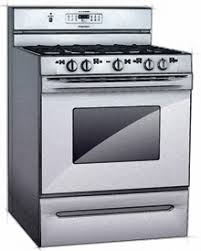
You see things priced at $4.99 or $11.99 or even $499.99. Why do they price them with odd endings? why not just price them at $5.00, $12.00 and $500.00. There is a reason behind this pricing and that is that when people see something priced at $499.99 such as an oven, they are going to associate the price with something just over $400 instead of $500. It is also proven that if something is priced at $500.00 and the company reduces the price by a penny bringing the price to $499.99 than the demand for the product as well as the sale of the product will increase!

A great example of a retailer that uses odd even pricing is Walmart; almost all of their prices end in an odd number as apposed to an even dollar amount.
Bundle pricing: The marketing of two or more products that are sold as a single product for a single price.

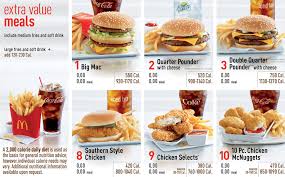
This type of pricing is very common; there are many different examples of this ranging from Air lines offering vacation packages that include airfare, car rental and lodging to the McDonald value meals. The purpose behind the idea of bundle pricing is based on the idea that consumers value the package more than the individual items. Bundle pricing more often than not will provide the customer with a lower cost than it would have been for them to buy the items separately.

Yield management pricing: The charging of different prices to maximize revenue for a set number at a certain time.
Have you noticed that when you go online to any airline website to book your tickets that the Coach or first class seats are much more expensive than the regular seats. The reason they do this is to maximize revenue for a set amount of time. This approach is complex but it is constantly matching demand and supply to come up with the price for the product or service. Airlines, hotels, cruise ships, and car rental companies use it when pricing their products and services.

A great example when regarding Airlines is Jason may book flight number 238 at 9:00 am and pay $400 for a ticket and then his friend Joe gets on at 3:30 Pm to book the same ticket on flight 238 and pays $576 for the ticket; this displays how the company can control the price; there were obviously more available spots on the plane when Jason booked and less seats available when Joe went to book which is why his price was much higher than Jason's price.

A great example when regarding Airlines is Jason may book flight number 238 at 9:00 am and pay $400 for a ticket and then his friend Joe gets on at 3:30 Pm to book the same ticket on flight 238 and pays $576 for the ticket; this displays how the company can control the price; there were obviously more available spots on the plane when Jason booked and less seats available when Joe went to book which is why his price was much higher than Jason's price.


You have just learned about five different pricing approaches that can be taken by marketing teams in terms of pricing their products.
1:Skimming pricing
2: Penetration pricing
3:Odd- even pricing
4: bundle pricing
5: Yield management pricing


All five of these approaches are very important when it come down to the company's selection of their price approach. There are many other approaches that are important such as
* prestige pricing
*target pricing
*standard mark up pricing
*Cost plus pricing
* Customary pricing
* Loss leader pricing
If I were to go through all of these different types of pricing my blog post would be miles long. But there are many resources online if you are interested in any of these strategies and wish to learn more about them. I do want you all to know though that the five that I did give you some background on are some of the more common ones that you tend to see and hear about companies all over doing.
Lets do a quick review as to what companies use what pricing approaches......
As i mentioned SKIMMING PRICING is done by Gillette, PENETRATION PRICING is done by amazon in terms of their kindle fire, ODD EVEN PRICING is done almost anywhere but is widely seen at Walmart, BUNDLE PRICING, is done by many travel companies as well as McDonald's in terms of their value meals and last but not least YIELD MANAGEMENT PRICING is done by many companies, airlines in specific when it comes to the pricing of their tickets.
Pricing is not as easy as one thinks; there is much time and research done in terms of setting a price for a product that is going to be successful in two ways; successful for the company so that people buy the product but also successful in the sense that consumers are satisfied with the product. As I stated above the company has the ability to choose whatever pricing strategy they feel is going to be most beneficial for their company; and from that they are able to set their final price for their product.
I hope you enjoyed learning about pricing!
Until next time,
Alexis Combs
Resources:
Kerin, Roger A., and Steven William Hartley. Marketing. 11th ed. New York, NY: McGraw-Hill/Irwin, 2013. Print.

No comments:
Post a Comment