DEVELOPING NEW PRODUCTS AND SERVICES
Hello Everyone,
Welcome back to my marketing blog, I hope you guys have been enjoying my postings and learning about marketing at the same time I am. Just to fill you all in; This is going to be my SIXTH blog post of the semester. This blog is going to be filled with many pictures and examples to inform you all about THE NEW PRODUCT PROCESS
Lets Jump right in; first by defining a few terms that are going to be needed when talking about the new product process.
IMPORTANT TERMS:

- PRODUCT: a good, service or idea that is comprised of many different features; intangible and tangible that are made to satisfy the consumers needs when exchanged for something of value.
- SERVICE: intangible activities or benefits that are used by an organization to get the customer what they are looking for in exchange for something of value.
- CONSUMER PRODUCT: products that are bought by the ultimate consumer
- BUSINESS PRODUCTS: products that a business buys when trying to provide other products resale process.
This is just a small list of important terms that you are going to want to keep in the back of your head when we begin the NEW PRODUCT PROCESS.
Firstly what is the new product process? Well it is just about what it sounds like; the specific definition is the seven stages an organization goes through to identify business opportunities and convert them into stable products or services.

STAGE 1: NEW PRODUCT STRATEGY DEVELOPMENT:
This is the beginning point of this process; this stage is designed to define the role for a new product in understanding with the companies purpose.
In this stage the company uses both SWOT and ENVIRONMENTAL SCANNING ( which i talked about in my previous blogs) to look at what the strengths and also what the weaknesses are and then use the findings to identify opportunities and threats to the business.
The overall goal of this stage is to be able to come up with an outcome and also a protocol for the product and see how it may fit in with the business as a whole.
Overall this is the planning stage; take a group project for example; you are assigned your topic but your first group meeting is going to consist of conversing with one another about how you are going to attack the project.

STAGE 2: IDEA GENERATION:
Idea generation is once again very self explanatory; this step involves developing a pool of concepts to act as candidates for new products. It is all about building on the stage that came before; in this case stage 1.
There are a few different ways the company can go about getting ideas.. those being
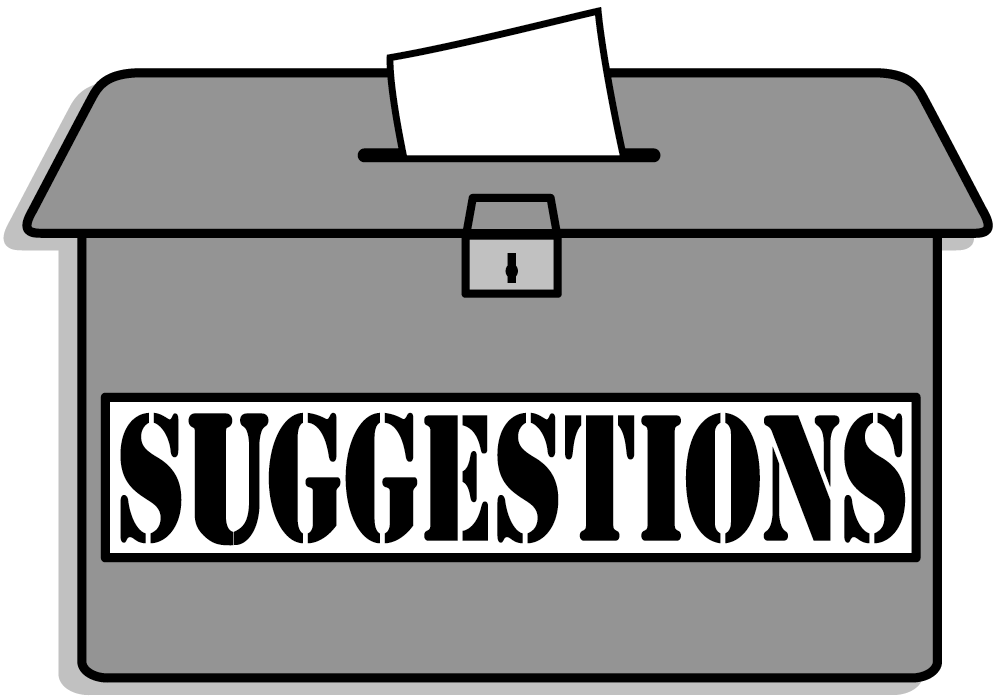
EMPLOYEE AND CO-WORKER SUGGESTIONS: The employees of the company should be able to voice their opinion about new ideas for products in the works; many companies have suggestion boxes that their employees utilize to get new ideas.
CUSTOMER AND SUPPLIER SUGGESTIONS: Companies also do the same thing when it comes to the consumer/customer themselves. Sales reps of many companies get out into the market and talk with the customers and ask them questions pertaining the product; this is also a great way to generate ideas for new products because you are going directly to the source; to the person who is going to be purchasing your product; the customer!
RESEARCH AND DEVELOPMENT: Research and development is yet another way that a company can generate ideas. They can be in the works of producing a computer but they discover a great feature that could be utilized on a smart phone. Ideas can generate everywhere.
- Companies can use all three of these steps to help with the idea generation process or they can use a select few; all of these are going to help the product become more successful in the end.
STAGE 3: SCREENING AND EVALUATION:
This stage of the new product process is the stage that is used to evaluate the company internally and externally in regards to ideas and also in this stage they weed out some ideas that display no further effort.
Lets outline the two different approaches
INTERNAL APPROACH: This is done by the employees of the business, they evaluate the technical feasibility of a product that has been proposed and then they determine weather or not it meets the new product strategy development stage.
Lets take 3M for example; one of their recent innovations was micro replication technology- one that has 3000 tiny gripping fingers per square inch used to improve gripping of golf or work glove. (Kerin).


EXTERNAL APPROACH: This is where firms use concept tests, external evaluation with consumers that contains new product idea as apposed to the real product.

STAGE 4: BUSINESS ANALYSIS:
This stage pertains to the specific features that the product has to offer, along with the marketing strategy needed to bring the product to market and make their financial presumptions.
This is the last step in the new product process before a prototype is created!
This stage is meant to assess the total fit of the proposed product keeping the companies missions and objectives in mind.
WHAT DOES THIS STAGE REQUIRED?
- Detailed financial projections
- assessments of the marketing and product synergies relating to existing operation

Overall this stage is very important to the new product process as a whole; it is the part right before spending money to create a prototype and also it involves a large analysis of the business as a whole.
STAGE 5: DEVELOPMENT:
This is the stage we have all been waiting for! This stage of the new product process is what turns an idea on paper into a prototype! The result that you are going to obtain from this is a demonstrable product.
There are many products that come out with prototypes; and not just one prototype, sometimes the product is not what they company expects it to be and they decide that need to go back and revisit what they did and update the product.
I have embedded a clip about target; it is a quick snip it about their product and development and their thoughts on the process; it just puts into perspective that all companies go through this stage before coming out with a finalized product.

STAGE 6: MARKET TESTING:
We are almost to the final step in the process; but first we have to talk about market testing.
Market testing involves exposing the product to customers under business like conditions to see if they will buy the product or not.
There are three main kinds of test marketing
1) standard
2) controlled
3) simulated
STANDARD TEST MARKETS: The objective of this type of marketing is for a company to develops a product and then try and sell it through a normal distribution channel in an array of test market cities.
- An interesting feature about this type of test market is the producer sells the product to distributors, retailers and wholesalers.
CONTROLLED TEST MARKETS: Involves contracting the entire program to an outside service. That service is then going to pay the outside retailer for space on their shelf.

SIMULATED TEST MARKETS: This option is a way for the company to save time as well as money. This is a way that tries to replicate a full test market to a limited degree.

Any one of these strategies is a good strategy to go with; it all depends on what your company is looking to do; are they looking to save time and money or are they looking to test the outside service.
WE HAVE FINALLY REACHED STAGE 7 OF THE NEW PRODUCT PURCHASE PROCESS!!
STAGE 7: COMMERCIALIZATION:
This is the final stage of the seven step process; it encompasses the above six turns to come up with the final product. This stage of the new product process is the stage used to position and launch the product in full scale production and sales.
*** Companies take precautions at this stage though; this stage is very expensive and they want to be sure that this is exactly what they want to launch into the market before they do so***
After the company has gone through all the stages it is time for them to release their product into the market; it is just like when your parents dropped you off at college; they released you into the college world; hoping that you will survive. This comes in to play also with product; there is always the thought in the back of the companies mind that their product will be cannibalized by other markets. This just means that they have to have the best product with the best price in the market and they will do just fine in comparison to other markets!
This completes the NEW PRODUCT PURCHASE PROCESS; all seven of these steps have to work together to enable the company a product that is going to succeed in the market in the minds of the customers and also in the pockets of the company in terms of profit.
Overall this process is very straight forward and it outlines for a company exactly what they need to do to be able to obtain a successful creation of a new product!
So just to recap the steps
1) New product strategy development
2) idea generation
3) Screening and evaluation
4) Business Analysis
5) Development
6) Market testing
7) Commercialization
Now that you have the knowledge about the new product process go out and tell all your friends or even the company you work for and maybe you can assist them in their new product process!!
I have attached a video that outlines the process as well to help anyone who is still a bit confused about the process of a whole.
Until Next time,
Alexis Combs
Sources used:
Kerin, Roger A., and Steven William Hartley. Marketing. 11th ed. New York, NY: McGraw-Hill/Irwin, 2013. Print.

Within this webpage, you'll see the page, you need to understand this data. ai video creation software
ReplyDelete