SCANNING THE MARKETING ENVIRONMENT:
Welcome back
to my marketing blog once again! We are now on to chapter 3, so I hope that the last
two blogs gave you some helpful background information about marketing, and you
are now familiar with the main concepts that we use in marketing every day. This
blog is going to focus on the important information, definitions, and concepts
regarding Environmental
Scanning.
Many of you
may not know what environmental scanning is and to be honest when I began
reading this chapter I had no ideas what it was either! So we are going to learn together!
Environmental scanning :
The process of
continually acquiring information on events occurring outside the organization
to identify and interpret potential trends. (Kerin)
Overall in this blog we are going to learn how environmental scanning provides information about social, economic, technological, competitive and regulatory forces.

It is very important to understand that these forces affect the marketing activities of a firm in numerous ways. Lets take a closer look at each of these five sections and see if we can uncover more about the topic of environmental scanning.
SOCIAL:
The social forces of the environment include the demographic characteristics of the population. When there are changes to this force there is much impact on marketing.
When looking at demographics: demographics are a way of describing a population based on certain characteristics, those characteristics could be age, income or gender. demographics is a large part when we look at the social aspect but another large part is the generational cohorts.
GENERATIONAL COHORTS: Groups of people who share the same birth years, personality, and history. There are four different categories of cohorts.
 BABY BOOMERS:
 BABY BOOMERS:
 - generation born between 1946-1964.
- retiring as we speak
- their participation in the work force has made them the wealthiest generation in history.
GENERATION X:
- generation born between 1965-1976
- known as the baby bust, because of the number of people born during time decreased.
- self reliant consumers and better educated than any generation

GENERATION Y:

- includes 72 million people born between 1977-1994.
- increasing births, resulting from baby boomers having children
- exerts influence on music, sports, computers,
- strong willed, passionate about the environment
MILLENNIALS:
- There is an inconsistent definition for this group; but it is refereed to as the younger members of generation Y.

All four of these groups play a large role in the marketing world every day. It is a tough job for the marketing teams to try and target all different ages and personalities, likes and dislikes, wants and needs, but they do. It just shows clearly that there are all types of people out there and they all have to be able to obtain the information. lets move on to the next part of environmental scanning; economic forces.
ECONOMIC:
The second component of environmental scanning is ECONOMY: This deals with the income expenditures and resources that affect the cost of running a business and or household.
there are two different forms to the economic force; those are macroeconomic and microeconomics views
Macroeconomic/Microeconomics conditions:
macroeconomics is more focused on GDP, unemployment and price change; where as microeconomics is concerned with the single factors and the effect it has on a particular individual.
 lets look at some important economic terms regarding consumer income.
Gross income; The total amount of money made in one year by a person household or family unit.
Disposable income: The money a consumer has left after paying taxes to use for necessities such as food housing clothing and transportation.
Discretionary income: The money that is left over after paying taxes and necessities.
TECHNOLOGICAL:
Technology is simply changing how we live our day to day lives; if we do not have our smart phones to communicate as well as our computers we are simply lost. Technology is the innovation from applied science and engineering research. technology has a very large impact on customer value
Customer Value:
- The cost of technology is plummeting making customers value assessment of technology based products to focus on things such as quality and service
- Technology provides value through development of new products
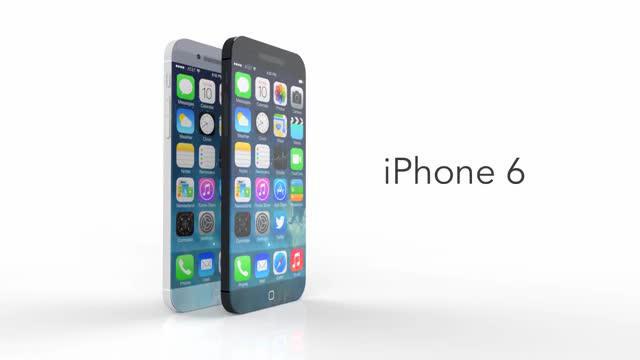
- Technology can also change the existing product we have in our markets; we can improve our current products to make them better.
Overall it is clear that technology is going to some day take over the world!( per say!) but for now we just have to accept the fact that technology is going to keep changing and improving and we are going to have to make adjustments to our marketing strategy along the way. A great example is Facebook, you can have Facebook at your finger tips if you wish, you also have your E-mail and many other social networking sites and means of communication.


COMPETITIVE:
The fourth component of environmental scanning is competitive; this refers to the other firms that could have the same product available to satisfy the markets needs. There are different forms of competition.
Pure Competition: There are many sellers and they all are selling a very similar product
Example: Abercrombie and Fitch and Hollister; these clothing stores sell cloths that are very similar to one another

Monopolistic Competition: When sellers are competing with substitute products that range about the same in price.


Example: If the price of Ben and Jerry's ice cream is too high in price you may want to switch to eating frozen yogurt.
Oligopoly Competition: When a few companies control the majority of industry sales.
Example: A great example of this would be the cell phone companies; AT&T vs Verizon. 


Pure monopoly competition: Only one firm sells the product.
Example: Town water supply, electricity, cable company.


Competition is a very big part of marketing. Your company needs to have the very best product out on the market and if you do not have the best product then you are going to have to improve your product to make it better to be able to compete with the others. The company needs to be able to consider all of these forms of competition and be able to design a market strategy that is going to help them succeed if they come across some tough competition.
The last source in the environmental scanning process is regulatory forces:
REGULATORY:
Regulatory consists of restrictions at the state and also the federal level that place laws on businesses regarding the conduct of its activities. The main reason regulations are in existence today is to protect the company. The next few definitions and examples are ways that the companies can protect their product as well as their company as a whole.
Patent Law: This law makes it so other companies can not use the product, the other companies can not reproduce or even sell the product.
Copy right law: A way for a company to protect themselves from competitive position in a product. A copyright is secured automatically when the product is created.
There are many things that have a copy right such as book, music, computer programs and movies. 


Now that we have gone over all five sections of the environmental scanning process we can see that they all are very important in regards to marketing. This process of environmental scanning never stops; the marketing managers of companies are checking day in and day out about the potential trends that are going around and constantly acquiring information to be able to enable good business.
I hope that you guys learned a great deal about what Environmental scanning consists if you are ever asked what the components are you will be able to tell them: SOCIAL, ECONOMIC, TECHNOLOGY,COMPETITION AND REGULATORY forces.
Thanks for reading guys,
Until next time;
Alexis
Resources used:
Kerin, Roger A., and Steven William Hartley. Marketing. 11th ed. New York, NY: McGraw-Hill/Irwin, 2013. Print.

No comments:
Post a Comment