Friday, December 12, 2014

Blog 10: End of semester reflection!

THE END HAS COME!

Hello everyone,

Sadly this is going to be my last post for the semester. My marketing course is coming to a quick end and this is going to be my final blog reflection. I would like to thank you all up front for reading my blogs and following me; I hope you all enjoyed reading and learning about marketing! 

In this reflection I am going to inform you all of some of my favorite marketing topics and explain to you all why that is! Along with I am going to address the lessons I learned as well as how those lessons connect to the course outcomes and objectives. 

Let's begin with my favorite marketing topics: 

Over the semester we covered 12 intense chapters ranging from simple concepts such as target markets, and pricing to more complex things such as pricing, the product life cycle and market segmentation. All 12 of these chapters have come together and have given me a fabulous understandings of the marketing mix. 

Out of all of the topics in marketing there are four that are my favorite and that I feel I could see myself involved with sometime in the future.
--------------------------------------------------------------------------------------------------------------------------
  • Marketing and the economic force in terms of the three kinds of consumer income
This concept was very easy for me to grasp seeming that i am an accounting major and we deal with all types of incomes all the time. There are three types of consume income; gross income, disposable income and discretionary income. Gross income pertains to all the money that a person makes in one year; it could also be by all the money that a household earns during a year. Disposable income is the income that money that is left for the consumer after they paid their taxes and paying for supplies that are necessities; such as food, clothing, gas and more. Lastly discretionary income is the money that once again is left over after the disposable income step. The money that is left after paying necessitates is used for anything of desire for the consumer; such as a shopping spree, vacation or new car. ( Kerin, 75)

I believe that this concept stuck with me for a couple reasons, the first being that i enjoy working with numbers and calculating things. This topic also showed me that income is not just involved in accounting it is involved in other subjects such as marketing. I feel that being informed about these types of income is very important in any field but especially accounting and marketing. 


--------------------------------------------------------------------------------------------------------------------------
  • The Consumer Purchase Decision: 
I found the consumer purchase decision a very interesting thing to learn about because we use it every day and we do not even realize it. Before taking this course I did not know what this process was or what it was called but I did it on a day to day basis.

This process consists of 5 steps that lead a customer through the decision making process of purchasing a product or service. The five stages are....(Kerin 110)
1) Problem recognition
2) Information search
3) Alternative Evaluation
4) Purchase decision
5) Post purchase behavior. 

Now that I know what this process entails it is easier for me now to connect what my mind is going through when I decided that I needed a new bathing suit for my cruise. My problem recognition is that I need a bathing suit. I then go online to search for where I am going to buy the bathing suit. I then can move on to step three and the alternative evaluation; this entails clarifying the problem for the consumer. Then step four the purchase; I have to decide if i am going to purchase the bathing suit from Kohl's or JCP and if I should buy it today or tomorrow. After I have purchased the bathing suit I will enter step five; post purchase behavior, I will compare my purchase others and contemplate if I made the correct decision! 


--------------------------------------------------------------------------------------------------------------------------
  • Product Life Cycle 
I believe that the product life cycle is a very important topic for all to know about. This process describes the stages that a product goes through in the market. There are four stages that the product can travel through; those being, introduction, growth, maturity and decline. All four of these stages have specific sets of information that go along with them. 

Introduction: very self explanatory, happens when a new product is introduced into the market. during the time of introduction it is likely for sales to be minimal. (Kerin 266)

Growth: This stages is where the product gains more of a reputation in the market. competition begins to appear as well as there is a steep increase in sales.  (Kerin 266)

Maturity: This stage is similar to when you mature from a child to an adult; there is a slowing of the overall industry. This stage is more for people who are repeat customers who are looking to purchase another of the item. (Kerin 266)

Decline: Once again this stage is pretty self explanatory; it occurs when there is a drop in the sales of the product. The product also enters this stage when there is a change in the economy.  (Kerin 266).

--------------------------------------------------------------------------------------------------------------------------
Packaging and Labeling
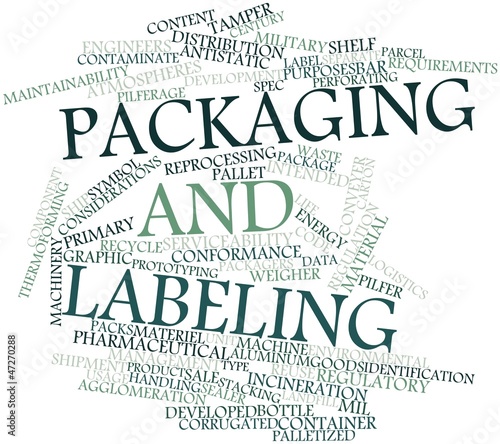
Packing and labeling is a very important part of having a successful product. If the packaging is not appeal to the customer than they are going to over look your product and move on to the next. The packing of the product is anything that the product is placed in for sale. such as the packaging of an I phone is a box where as the packaging of chips is a bag. Along with packaging comes labeling; labeling is an important part of the product as it displays the product or brand, who the manufacturer of the product was as well as the contents of what is in the container. As I briefly mentioned earlier the labeling is the most important as it displays the image of the product. If it does not catch the eye of the customer right off than there is no sense is having the product on the shelf. (Kerin 284)

I was fortunate enough to be able to help my dad out with this at his job a few months ago. My dad works at Leader Evaporator Co. which is a company that designs and produces products for maple sugaring. I was able to help assist them in creating a label for their new RO machine. I put my marketing skills to good use and they are excited to be able to release the new label next year. This was a great experience for me; I was not only able to help with creating a label but I was able to see how they were incorporating their company as a whole in their label, they have parts of their mission, goals, and  values along with their company colors and slogan all in their label for their product. It opened my eyes to what it is like to work with these things in real life. 


There are many other topics in the world of marketing but these topics are the topics that I was able to relate to in way or topics that interested me very much. 
_________________________________________________________________________________
I am now going to look at how the course outcomes and the objectives were incorporated with my learning throughout the semester. These objects were given on the first day of class in the syllabus and now it is time to look back on them and see if I learned everything I was supposed to. There are many course outcomes and objectives but I am going to be looking at six in particular. 


Course Objectives
Course outcomes
To examine and convey basic and emerging concepts and terminology
Analyze and evaluate basic financial statements and business formulas
To have the opportunity to put marketing into action via team and individual projects research reports and presentations
Participate and communicate as an effective member of a team
To set personal and professional goals and positively contribute in an engaged class. 
Understand that the marketing process starts and ends with customers and consumers.

COURSE OBJECTIVES : 
Examine & convey basic & emerging concepts & terminology:

I believe that over the course of the semester I was able to incorporate much of the vocabulary into my works. I was able to put the concepts to good use when explaining myself on tests and quizzes. I was able to to incorporate my knowledge of terms and concepts during practice marketing. I had to have a great understanding of what was going on so that I was able to know what terms to apply. For example I had to know that our fixed costs were too high and in turn that was making our net income become negative. Also we had to know basic terms such as target market, price, product, place and promotion as well to be able to run the business. I believe that overall I was very well at applying and examining terms and concepts during the semester in both individual work as well as group work. 

 Have the opportunity to put marketing into action via team and individual projects research reports and presentations

Throughout the semester it was very easy to put marketing into action in team and individual projects and presentations. Beginning with the Ad presentation; the Ads gave us a change to pick a commercial that we found to be effective and analysis it. we were required to inform the class of the P's the commercial along with the target market and why we believed it to be effective. This gave us the opportunity to think out of the box and put all the pieces together. The next thing I feel gave me the opportunity to put marketing into action was the TED talk. The TED talk was similar to the ad but this required us to pick a video that was central to marketing and give examples from the video as to why that was so. My video was centered around machines taking jobs away from people. Now going into group work practice marketing was a great simulation to put marketing into action. It was like we were running the company (even though it was fake) we were able to put our knowledge to good use; we had to generate a price for our bag also taking into consideration the production cost, along with picking a target market and determining the correct and ethical means of communication and advertising with our market segment. Along the way we had to make changes when our product were not preforming up to standard or when our target market was not buying our bag. We had to use many pricing strategy, price skimming, along with penetration pricing in many turns. I could write pages on this game but I believe overall it was a great way to incorporate the concepts as a whole; the marketing mix is key to this; product, place, price, promotion. Lastly I believe that being able to incorporate marketing into our reports was very easy; we were able to take the skills and idea from the game and formulate them into a report in which we were able to analysis ourselves to the other teams. Overall i feel that there were countless opportunities to put marketing action to good use!

To set personal and professional goals and positively contribute in an engaged class.
I believe that throughout the class I set some very high goals for myself and my group. I went in to the class telling myself that I was going to obtain an A in the class. So far I have done just that I was able to reach my goals through hard work and dedication to my work. I believe that my goals were obtainable for a few reasons; the way the information was taught was a great way for me to learn; i was able to obtain the information easily which in turn helped me to apply myself and my learning's to the work that came along with the class. When it comes to engaging in class and contributing I believe that i contributed a lot; I was always engaged in the conversation that was going on and if I did not have an answer right away I would either wait for something to come or try to build off of what my other classmates were saying. 

I also feel that I was able to set professional goals in the sense of presenting; I have gotten over my fear of presenting; I get nervous at first but overall I feel comfortable in front of others; and presenting is something that I am going to have to be comfortable with with the field that I am entering. 
COURSE OUTCOMES: 

Analyze & evaluate basic financial statements & business formulas:

During the semester we were able to evaluate and analyze financial statements in a couple of different ways withing the practice marketing world. We were able to analyze in two ways; we were able to analyze the financial information that was given for all of the teams on the leader board as well as we were able to analyze our own and see the differences and similarities. We were also about to analyze the statements and calculations that we generated. we were able to see how one income statement changed from one turn to the next and also be able to get an idea as to what we wanted to change once again for the next turn. I believe that my analyzing and evaluation skills were put too good use seeming that I am an accounting major and this type of analysis comes easily to me. I was one of the main leaders in the group that dealt with the financials just because it made so much sense to me. I feel that if i were not to have known what fixed and variable costs, types of income, break even, return on sales and such then I feel that our team may have struggled a little more in this area of the course. 


Participate and communicate as an effective member of a team:
As a team member in practice marketing I believe that I went above and beyond with my team. During the beginning of the team project (Practice marketing) I feel that I played a large role in my team.  I am a very organized and proactive person. I feel that I was the one in my group that always wanted to begin the assignment early and get things done before the due date. I think that overall I was a large part of this team; at times I got very frustrated with my team when things were not done properly or they were not able to meet; but I was able to overcome that and be able to understand that this is going to help me when I enter the job world. I am going to have to deal with many difficult and unique people when I enter the job world, so when looking at a good part about this it gave me a chance to begin working with others and working as a team. once again overall a great experience to be part of.

Understand that the marketing process starts and ends with customers and consumers.

It has become very clear to me that without customers than marketing would be a complete fail. Marketing is centered around satisfying their customers and selling product. If there were no customers involved in the market than all the businesses that are producing products would be producing their products for no apparent reason. I feel that this step ties in a lot of marketing concepts ranging from the pricing, the product life cycle, the 4 P's, consumer purchase decision, discounts, allowances, segmentation, distribution channels; all of these concepts and ideas would not be able to be implemented without the consumers. Customers are what makes the marketing world go round and simply without them then there is no market, there is no need for manufacturers and there is no need for any of the concepts around marketing; marketing would simply disappear!

--------------------------------------------------------------------------------------------------------------------------

Overall I was able to learn a great deal from this course. I was able to gain very important skills such as presentation skills along with group work skills that I am going to be able to implement in my work after college. Along with these skills I learned many helpful marketing concepts but also concepts that are important and concepts that are going to be useful to me no matter the field I choose. This class was a great course and I would recommend  it to anyone!


That is it folks; this is my last blog; I thank you once again for sticking with my all semester and reading up on the latest marketing concepts!!


Thank you,


Alexis Combs 

Resources used:
Kerin, Roger A., and Steven William Hartley. Marketing. 11th ed. New York, NY: McGraw-Hill/Irwin, 2013. Print.


Friday, November 21, 2014

DISCOUNTS AND ALLOWANCES 

Hello everyone and welcome back to my blog! Just so that you all know; the semester is coming to a fast end and this is going to be my second to last post;  I will only have one post left until the completion of my marketing class. That is not going to stop me from teaching you all about some very interesting marketing topics! 

Today our discussion is going to be on DISCOUNTS AND ALLOWANCES.  Many of you know what a discount is in general terms but what is the background behind it and are there any other marketing aspects to a discount? Also we are going to examine what an allowance is. 

Lets get started:

DISCOUNT: A reduction from the list price that a seller gives a buyer as a reward for some activity of the buyer that is favorable to the seller. 

We are all very familiar with discounts such as buy one get one free (BOGO) or buy one get one 1/2 off. These types of discounts are broken down into four different categories; quality, seasonal, trade (functional) and cash discounts.


QUALITY DISCOUNT:A reductions given in terms of unit cost for a large order. 
A great example is a photocopying service; Staples for example may have a set price of 15 cents per copy for 1-25 copies then 10 cents per copy for 24-100 copies and then 6 cents per copy for 100 plus copies. You may think why would they do this? Aren't they loosing money? The company is not loosing money it will pass up one some of the cost savings in form of quality discounts to the buyer. 


Within quality discounts there are two general kinds:

Cumulative:  Apply to the accumulation of purchases of a product over a given time period, typically a year. These types of discounts encourage repeat buys by a single consumer.
Non cumulative:  Based on the size of an individual purchase order; this encourages large individual orders not a series of orders. A great example of this would be UPS, they offer a discount when companies decided to ship a large number of packages at one time. 


SEASONAL DISCOUNT: To encourage buyers to stock up on inventory earlier than their normal demand would require. 


Tis the season for seasonal discounts; we are very close to the giving season and all retailers are offering seasonal discounts to their customers. 

A great example of a seasonal discount would be John Deere; John Deere that manufactures both snow blowers for the winter months and also lawn movers for the summer months. John Deere would offer a seasonal discount to encourage wholesalers as well as retailers to stock up on lawn movers in the winter months and snow blowers in the summer months. This helps John Deere to smooth out seasonal manufacturing peaks and troughs. 


TRADE(FUNCTIONAL)DISCOUNT: 
A discount that rewards the wholesalers as well as the retailers for marketing functions they will perform in the future.

* these reductions are given off the list price 
* Are offered to re sellers in the marketing channel on the basis of....
    1) where they are in the channel 
    2) the marketing activities they are expected to perform in the future

This type of discount can be rather confusing. if you have a list price of $100, then the discounts are 30/10/05

* the first number 30; signifies the percentage sequence; always refers to the retail end of the channel.

* the last number 5; refers to the wholesaler to the manufacturer in the channel. 

From here the trade discount is simple to figure out; it is each discount subtracted one at a time;

$100 quoted price;  30 percent of the suggested retail price 
($100 * .30= $30) $30 is the amount suggested for the retail price available to the retailer to cover costs.

wholesalers closest to the retailer in the channel gets 10% of the selling price 
($70 * .10= $7)

the final group of wholesalers in the channel that are closest to the manufacturer are 5% of the selling price ($63 * .05 = $ 3.15)

now subtract the three amounts that you calculated and you will get the manufacturers selling price to the wholesaler. 

$100-$30 = $70-$7= $63- $3.15= $59.85. 

There are many product lines such as hardware, food and pharmaceutical items that use this type of discount. 

CASH DISCOUNT:A type of discount that encourage retailers to pay their bills quickly; and if they do so then they will receive a cash discount. 

If your bill comes to $2,000 2/10 net 30. This means that the bill for the product is 2,000 but the retailer can take a 2% discount (2000* .02= 40) if the payment is made withing 10 days and send a check for $1960. 

If the company can not make the payment within 10 days the total amount of 2,000 is due within 30 days. 

The reason for cash discounts to consumers as well to eliminate the cost of credit granted to consumers. 


Now that we have gotten through the four kinds of discounts we can get into the allowances; allowances are similar to discounts in the sense that they are reductions in the list price.

ALLOWANCES: Reductions from list or quoted prices to buyers for performing some activity. 

Allowances are made up of two different kinds
Trade in allowances & Promotional allowances.


TRADE IN ALLOWANCES:  A price reduction given when a used product is part of the payment on a new product. This is a very effective way to lower the price a buyer has to pay without formally reducing the list price. 

A trade in allowance is as simple as trading your old car for a new car. A new car dealer will offer you a substantial reduction in the list price of your new car. 


PROMOTIONAL ALLOWANCES:  Undertaking certain advertising or selling activities to promote a product. 

Many types of allowances include an actual cash payment or an extra amount of "free goods". A portion of these savings are then on to the consumer by retailers.

Within promotional allowances is the idea of " Every day low prices" we have all heard this before and where have we heard it? Yes you are correct Walmart! Every day low pricing is the idea of replacing promotional allowances with lower manufacturing list prices.

* promises to reduce the average price to consumers while minimizing promotional allowances that cost manufacturers billions of dollars every year. 


That completes our discussion about discounts and allowances; lets recap:

Discount: A reduction from the list price that a seller gives a buyer as a reward for some activity of the buyer that is favorable to the seller. 

Types of Discounts:

QUALITY DISCOUNT
SEASONAL DISCOUNT
TRADE(FUNCTIONAL)DISCOUNT
CASH DISCOUNT

Allowances:Reductions from list or quoted prices to buyers for performing some activity. 

                        Types of Allowances:

TRADE IN ALLOWANCES
                        PROMOTIONAL ALLOWANCES:


I hope that you all learned a lot about discounts and allowances. Now when you go into the grocery store or to do your Christmas shopping this season you are going to be educated as to what discounts the retailers are offering you! You can always refer back to my blog to see what type of discount the store is offering. Discounts are a great thing and it is always in your best interest to take advantage of any discount that is going to lower the price for the product you are buying. 


Until next time,

Alexis 


Resources used: 

Kerin, Roger A., and Steven William Hartley. Marketing. 11th ed. New York, NY: McGraw-Hill/Irwin, 2013. Print.

Thursday, November 20, 2014

Pricing: blog #8

Is there more than one way to price a product?

Hello everyone; and welcome back once again to my blog! It is has been a little while since my last post. I have been very busy with all of my classes here at Saint Micheal's  College; it is almost the end of the semester; also known as crunch time! But without further ado it is now time to talk about pricing in terms of marketing!

I am going to give you some background information about pricing and then i am going to inform you about all of the different kinds of pricing approaches that are used in the world of marketing!
When you think of the word price what comes to mind? 
There can be many answers to this question depending on how you think of the word; to me i think of paying money to obtain a product. But there are many ways that the world price can be thought of...

You pay TUITION for attending college
You pay RENT for your apartment 
You pay DUES to an organization
You pay INTEREST on your bank loan
You pay a FEE when traveling on an airplane
You obtain a SALARY as a business person
You obtain a WAGE as an employee 
You receive a SALES COMMISSION as a sales person

All of these listed above are great examples of price; price plays a unique role in the marketing world. It is a good meeting place for all business decisions; because the price has to be "right" where the customer is willing to pay that amount; no matter if it is a tuition price, or a fee. The price still has to be attractive to the customer. 


what is a price?

Price plays a large part in our day to day lives; when looking at price through the marketing lens price is the money or other considerations that are exchanged for the ownership or use of a product or service.  

You may be wondering what the way that one can obtain a product without exchanging money. well that other way is known as BARTER; the practice of exchanging products and services for different products and services rather than money. Examples of this could be gold, silver, coins and much more. Most of the time money is how consumers obtain their products and services; but barter does still take place; 

a side note from marketing for a second about barter in the Caribbean!


Last Christmas when I was in the Caribbean I actually got to barter with a vendor on the Island. We were walking back to the cruise ship after a long day at the beach in St. Thomas. During my time at the beach I had gathered many large sea shells.(keep this in mind) When admiring his product I saw a beautiful blue necklace that I wanted. I was prepared to get out my cash and pay the price for the necklace. Turns out that the vendor asked me if I would like to exchange two of my sea shells for the necklace. Seeming that I had gathered almost 60 shells I said of course! He picked out the two shells he wanted and I took my necklace and I was on my way! This is a great example of barter; it does not involve the exchanging of cash. 


Now back to talking about pricing: we know that a price is the money that is exchanged for the ownership of use of a product or service. Now that we have some background and we know what barter is we are able to learn about the different strategies when it comes to pricing.

One more side note before we get to the different kinds of pricing: lets examine the....

price equation

PRICE= LIST PRICE- INCENTIVES AND ALLOWANCES + EXTRA FEES
This is a very important equation to know when you want to find the price of how much something cost. Lets take college for example... 
                          Tuition= 40,000
                          Incentives( scholarships) 3300
                         Extra fees ( lab fees, activity fees) 2500
to get to our final price we take the 40,000 tuition less the incentives of 3300 and then add on the extra fees of 2500; making the price of college $39,200. 

DIFFERENT PRICING APPROACHES 

Alright; I promise no more asides; we are now going to go over some different types of pricing! There are many more types of pricing strategies that exist but i am going to inform you of five of the main types of pricing strategies. 


Skimming pricing: Setting a high initial price that customers really wanting the product are willing to pay. 

  • The customers who will buy something with a skimming pricing strategy are those who really desire the product and are willing to pay whatever for the product 
  • A very effective strategy: when there is enough prospective customers, when the high price set will not attract competitors, customers will interpret the high price that you set your product at with a high quality product. 
Example: When looking at this strategy in context; lets take Gillette Razors for example; they  used the skimming strategy for their five blade fusion brand shaving razor. 


Penetration pricing: Setting a low initial price on a new product that is going to catch the eyes immediately of consumers. 


This strategy is the exact opposite of the skimming strategy; a great example of this type of pricing is Amazon; when Amazon came out with their Fire tablet they decided to price it at $199.00 where as all the other competition in the tablet market had prices of $499.00 and up. This shows exactly what the definition explains. It shows that they undercut the other companies in their market; the main idea of this is made to appeal to the broader segment as well as increase their total market share. 


Odd- Even pricing:  Setting prices a few dollars or even a few cents under and even number. 


You see things priced at $4.99 or $11.99 or even $499.99. Why do they price them with odd endings? why not just price them at $5.00, $12.00 and $500.00. There is a reason behind this pricing and that is that when people see something priced at $499.99 such as an oven, they are going to associate the price with something just over $400 instead of $500. It is also proven that if something is priced at $500.00 and the company reduces the price by a penny bringing the price to $499.99 than the demand for the product as well as the sale of the product will increase! 


A great example of a retailer that uses odd even pricing is Walmart; almost all of their prices end in an odd number as apposed to an even dollar amount.

Bundle pricing: The marketing of two or more products that are sold as a single product for a single price. 


This type of pricing is very common; there are many different examples of this ranging from Air lines offering vacation packages that include airfare, car rental and lodging to the McDonald value meals. The purpose behind the idea of bundle pricing is based on the idea that consumers value the package more than the individual items. Bundle pricing more often than not will provide the customer with a lower cost than it would have been for them to buy the items separately. 

Yield management pricing: The charging of different prices to maximize revenue for a set number at a certain time. 

Have you noticed that when you go online to any airline website to book your tickets that the Coach or first class seats are much more expensive than the regular seats. The reason they do this is to maximize revenue for a set amount of time. This approach is complex but it is constantly matching demand and supply to come up with the price for the product or service. Airlines, hotels, cruise ships, and car rental companies use it when pricing their products and services.


 A great example when regarding Airlines is Jason may book flight number 238 at 9:00 am and pay $400 for a ticket and then his friend Joe gets on at 3:30 Pm to book the same ticket on flight 238 and pays $576 for the ticket; this displays how the company can control the price; there were obviously more available spots on the plane when Jason booked and less seats available when Joe went to book which is why his price was much higher than Jason's price. 


You have just learned about five different pricing approaches that can be taken by marketing teams in terms of pricing their products. 

                                          1:Skimming pricing 
                                2: Penetration pricing 
                                             3:Odd- even pricing 
                                    4: bundle pricing 
                                                5: Yield management pricing 


All five of these approaches are very important when it come down to the company's selection of their price approach. There are many other approaches that are important such as

* prestige pricing 
*target pricing 
*standard mark up pricing 
*Cost plus pricing
* Customary pricing
* Loss leader pricing

If I were to go through all of these different types of pricing my blog post would be miles long. But there are many resources online if you are interested in any of these strategies and wish to learn more about them. I do want you all to know though that the five that I did give you some background on are some of the more common ones that you tend to see and hear about companies all over doing.

Lets do a quick review as to what companies use what pricing approaches......

As i mentioned SKIMMING PRICING is done by Gillette, PENETRATION PRICING is done by amazon in terms of their kindle fire, ODD EVEN PRICING is done almost anywhere but is widely seen  at Walmart, BUNDLE PRICING, is done by many travel companies as well as McDonald's in terms of their value meals and last but not least YIELD MANAGEMENT PRICING is done by many companies, airlines in specific when it comes to the pricing of their tickets.


Pricing is not as easy as one thinks; there is much time and research done in terms of setting a price for a product that is going to be successful in two ways; successful for the company so that people buy the product but also successful in the sense that consumers are satisfied with the product. As I stated above the company has the ability to choose whatever pricing strategy they feel is going to be most beneficial for their company; and from that they are able to set their final price for their product.


I hope you enjoyed learning about pricing!

Until next time,

Alexis Combs 


Resources:
Kerin, Roger A., and Steven William Hartley. Marketing. 11th ed. New York, NY: McGraw-Hill/Irwin, 2013. Print.

Sunday, November 2, 2014

PRODUCT LIFE CYCLE !

Hello Everyone and welcome back to my blog. Today we are going to be talking about the product life cycle and what it encompass. This process contains four important stages; beginning with the introduction stage, growth stage, maturity stage and lastly the decline stage. I am going to go into depth in each of these four sections to inform you all of what happens in each stage. 

PRODUCT LIFE CYCLE DEFINITION: The stages a product goes through in the marketplace. 


INTRODUCTION STAGE:  The introduction stage of the product life cycle happens when a new product is introduced to the predetermined target market. 

WHAT HAPPENS DURING THIS STAGE?
  • Slow sales growth
  • Minimal profit ( Due to minimal profit in this stage many companies like to invest in research and development activities)
  • Large amount of money spent on advertising and promoting 
    • The main goal of this stage is to increase awareness of the product so advertising is the best way for companies to do so
EXAMPLE: Gillette Razors. When this company was in the process of producing their Fusion razor they cut themselves out 200 million dollars for advertising to be able to introduce this product successfully to the market.
  • Gaining distribution 
  • Pricing can be high or low 
    • A high price can be used as a skimming strategy 
    • A low price can be used as a penetration pricing strategy. 
There are many different products that are in the introduction stage; a great example would be hybrid cars; there are not too too many of them in the market; they are just getting introduced and trying to find their place. 

GROWTH STAGE:  The growth stage of the product life cycle is when there is a rapid increase in sales. This is the stage where other companies have to watch out for the competitors because this is the stage where they are going to come in to play. 


WHAT HAPPENS DURING THIS STAGE?

  • Competition appears;
  • Increased product sales due to new people trying the product along with repeat customers 
  • Changes appear to help differentiate a company's brand from that of the competitors 
    • an improved version or new features are added to the original design 
EXAMPLE: The fax machine was big in the 1900's. The fax machine was released into the market just as any other product was and there were changes made to it.

  • models with built in telephones 
  • models using different kinds of paper 
  • models that incorporated electronic mail (E-mail)


  • During this stage it is important to broaden your distribution for the product. 
When looking at this stage as a whole; I refer to it as the trial and error stage; the company has created a product but they want to make it the best it can be for the customer so they are going to make as many changes as possible to enable to product to be successful in the market. A great example of a product in the growth stage is smart phones. smartphone companies are always coming out with new products; I Phone for example; we are not up to I Phone 6 and 6 plus; the company keeps changing their product to make it better for the consumer. 


MATURITY STAGE; This stage is characterized by a slowing of total industry sales or product class revenue.

WHAT HAPPENS DURING THIS STAGE?
  • Marginal competitors begin to leave the market 
  • Sales increase at a decreasing rate because there are less buyers entering the market 
  • profit declines; because of price competition between many sellers and the cost of gaining new buyers at this stage increases. 

Overall this can be a hard stage more many companies. The first couple of stages are easy for companies they are able to develop their product and then grow their product but this stage is different; the company is trying to maintain their market share.This can be hard when thinking about all of the different aspects that are involved and also all the competition that companies have to deal with as well. 

There is an up side to this stage though; they have the ability to differentiate their product from other companies with the same product. If they are able to do this then they are going to be the top in the market and they are going to be one step ahead of the rest. 


DECLINE STAGE:The decline stage occurs when the sales of a company drop. 

WHAT HAPPENS DURING THIS STAGE?
  • A product enters this stage not because there is something wrong with the actual product or because there is something wrong with the business strategy but because of the changes that occur in the environmental change. 
Lets look at an example: 
  • Digital music players such as I Pods and MP 3 players pushed compact discs out of existence; the same as E-mail did too fax machine. 


There are many products that are in this stage of the product life cycle; it is just a way of business; there are two different ways that companies can handle the declining product stage. 

DELETION: This stage is deleting or dropping the product from the company product line all together. This strategy is the most drastic measure that the company can take when they are in the deletion stage. 
HARVESTING: This is yet another strategy that a company can pick when in the decline stage; this stage is when the company retains the product but reduces the costs associated with marketing. This is different then the deletion stage because the company continues to be offer the product. Overall the purpose of this stage is to maintain the ability to meet requests of the customers. 


This completes the four stages that a product goes through; the product life cycle of a product. Not all products go through the whole cycle and some products stay in one cycle for a long period of time. It all depends on the company and what product the company is trying to sell to the customers. 

There are also a few other aspects that come into play when talking about the product life cycle... those being 

FOUR ASPECTS OF THE PRODUCT LIFE CYCLE: 
  • Length of the product life cycle :
    • There is no set length of time it take a product to make its way through the product life cycle. 
  • Shape of the product life cycle 
    • The product life cycle curves are all different depending on the type of product. 
      • High learning products: one that requires extensive customer education
      • Low Learning product: one that does not require much learning from the customer
      • Fashion Product: Depends on the style at the time. 
      • Fad product: Experiences raid sales in the introduction stage then begin to decline. This is mostly products with short life cycles.
  • The product level: class and form 
    • Product Class:  refers to the entire product category of the industry as a whole; such as the prerecorded music industry
    • Product Form: This is the varieties within the product class.Such as CD's cassette tapes I Pods and MP 3 players
  • The life cycle and consumers. This stage all depends on the sales to customers. The shape of the graph of the life cycle is going to mimic the sales of that product. 


This concludes the whole product Life cycle. There are many steps that have to take place for a product to be successful in going through this process but many products have been successful in doing so. There are a slim few that are stuck in one stage or another but that just means that the company has to work that much harder to make their product what the consumer is looking for. 


I have attached a short video that can help you to further understand the product life cycle!


Thank you once again for reading,

Until next time,


Alexis Combs